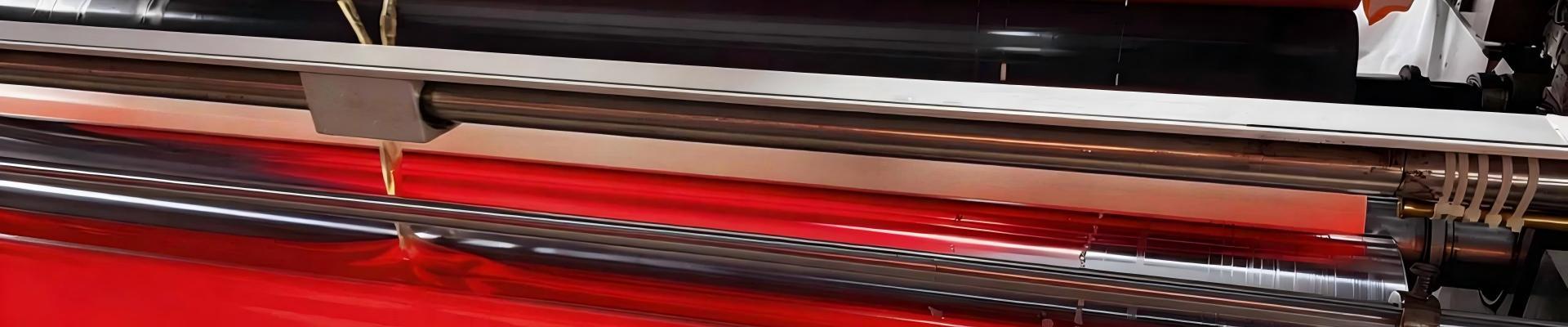
High-end bottle packaging often presents a narrow choice between biaxially oriented polypropylene (BOPP) pearl film and synthetic paper, two substrates with sharply different internal structures and performance profiles. The decision affects visual identity, production efficiency, and end-of-life recyclability. A closer comparison shows where each material delivers clear advantages — and where trade-offs remain unavoidable.
In high-end bottle packaging, BOPP pearl film and synthetic paper are two representative substrates. Their central difference lies in how each material is physically constructed.
BOPP is produced through precision stretching in both the machine and transverse directions, giving the film high tensile strength and moisture resistance. Microvoids created in its core layer through cavitation produce the material’s characteristic pearlescent appearance. Synthetic paper takes a different route: it fills a polymer base with large amounts of mineral filler, such as calcium carbonate, to mimic the microporous structure of traditional paper. That construction yields a high degree of realism in ink absorption and tactile feel.
The two substrates diverge across visual effect, physical feel, density, yield, and print adaptability. The table below summarizes the principal differences.
| Characteristic | BOPP pearl film | Synthetic paper |
|---|---|---|
| Visual effect | Dynamic pearlescent finish; high reflectivity | Matte finish; soft light absorption |
| Physical feel | Plastic toughness; smooth | Paper-like rigidity; substantial |
| Density and output | Low density; high yield per unit | High density; higher unit cost |
| Print adaptability | Requires specific surface treatment | Excellent ink absorption |
Those differences matter most when a brand weighs shelf presence against runnability. BOPP’s reflective surface can create a more animated look, while synthetic paper’s matte surface supports a restrained, premium tactile impression.
From a unit-economics perspective, BOPP pearl film’s lower density allows a longer roll length at the same weight, reducing the cost per label and cutting the number of roll changes and machine downtime on the production line. Synthetic paper, by contrast, retains an irreplaceable tactile advantage in high-end brand packaging.
In high-speed automatic labeling, synthetic paper’s high rigidity places greater demands on die-cutting. If the cutting tools are not properly calibrated, waste removal can break easily. BOPP film’s toughness gives it greater fault tolerance on high-speed labeling equipment.
Packaging sustainability has become an industry benchmark. A label made from a PP substrate combined with a PP container can create a mono-material package, greatly simplifying the recycling stream and aiding identification by near-infrared sorting systems.
Label recyclability is not absolute, however. It depends on compatible wash-off adhesives and on the actual processing capacity of local municipal recycling infrastructure. Only when those conditions align can true circularity be achieved.